

Vertical jump test · Sargent jump test
Purpose
Use this test to answer a simple question: how high can your client jump? For sports such as basketball, you can use the measurement as a starting point and track progress over time.
A box jump depends on more than jump height. Your client can reach a higher box by tucking their legs, so technique and hip mobility affect the result. The box heights available at the gym and the fear of falling can also limit the attempt.
With the wall test, you measure the difference between standing reach and the highest mark your client touches during a jump. You get a jump-height measurement in centimeters without relying on box height or a landing on top of a box. Keep the technique and measurement method consistent when you retest.
Procedure
- Preparation
- Prepare the wall, tape measure and chalk. Check that jumping is appropriate for the participant, then complete a 10-minute warm-up.
- Equipment
- Wall, tape measure and chalk or magnesium

1Apply chalkApply chalk or magnesium to the fingertips of your reaching hand. 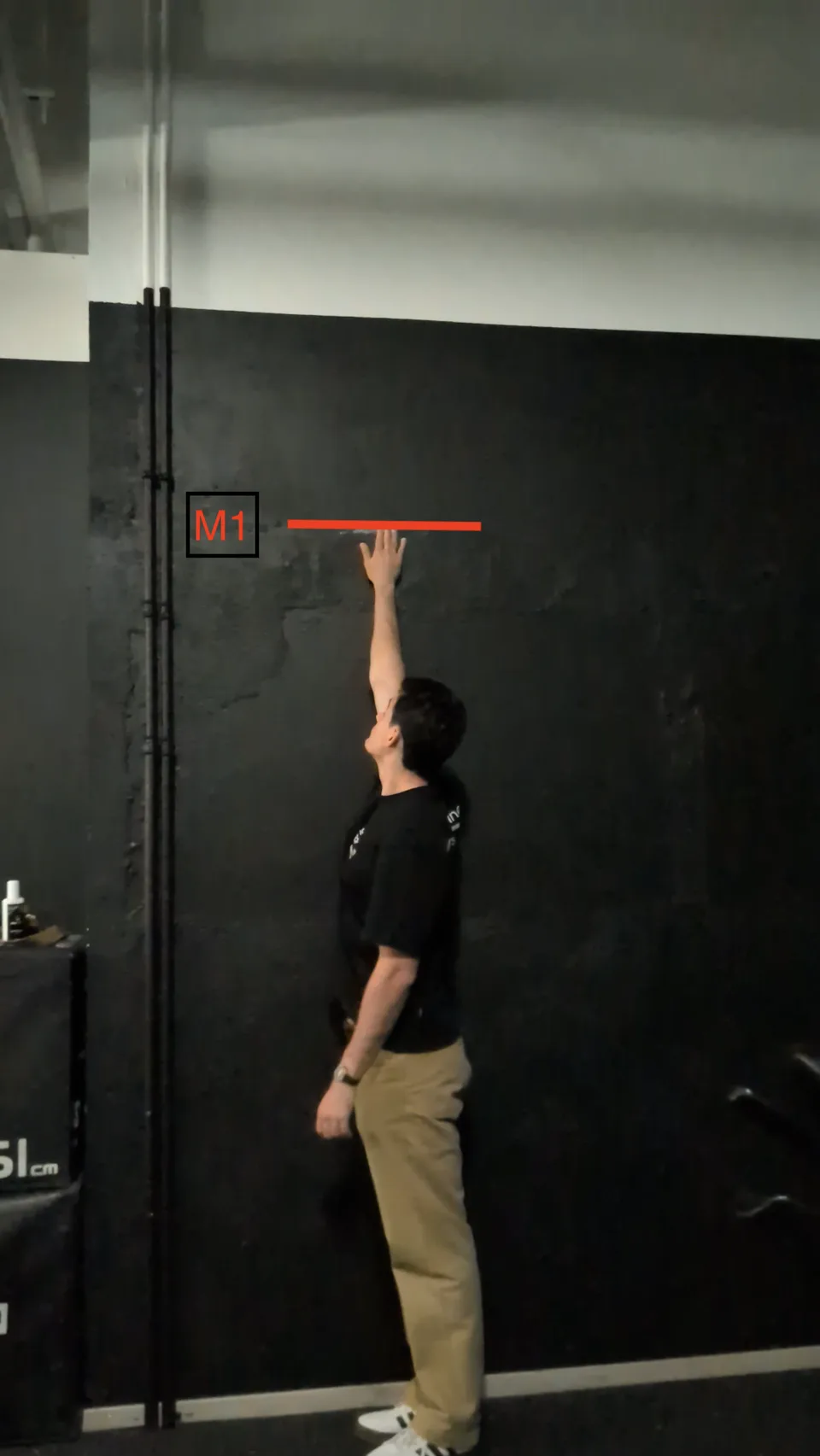
2Mark standing reachStand side-on to the wall with both feet flat. Reach as high as possible and mark the wall. This is the standing-reach mark, M1. 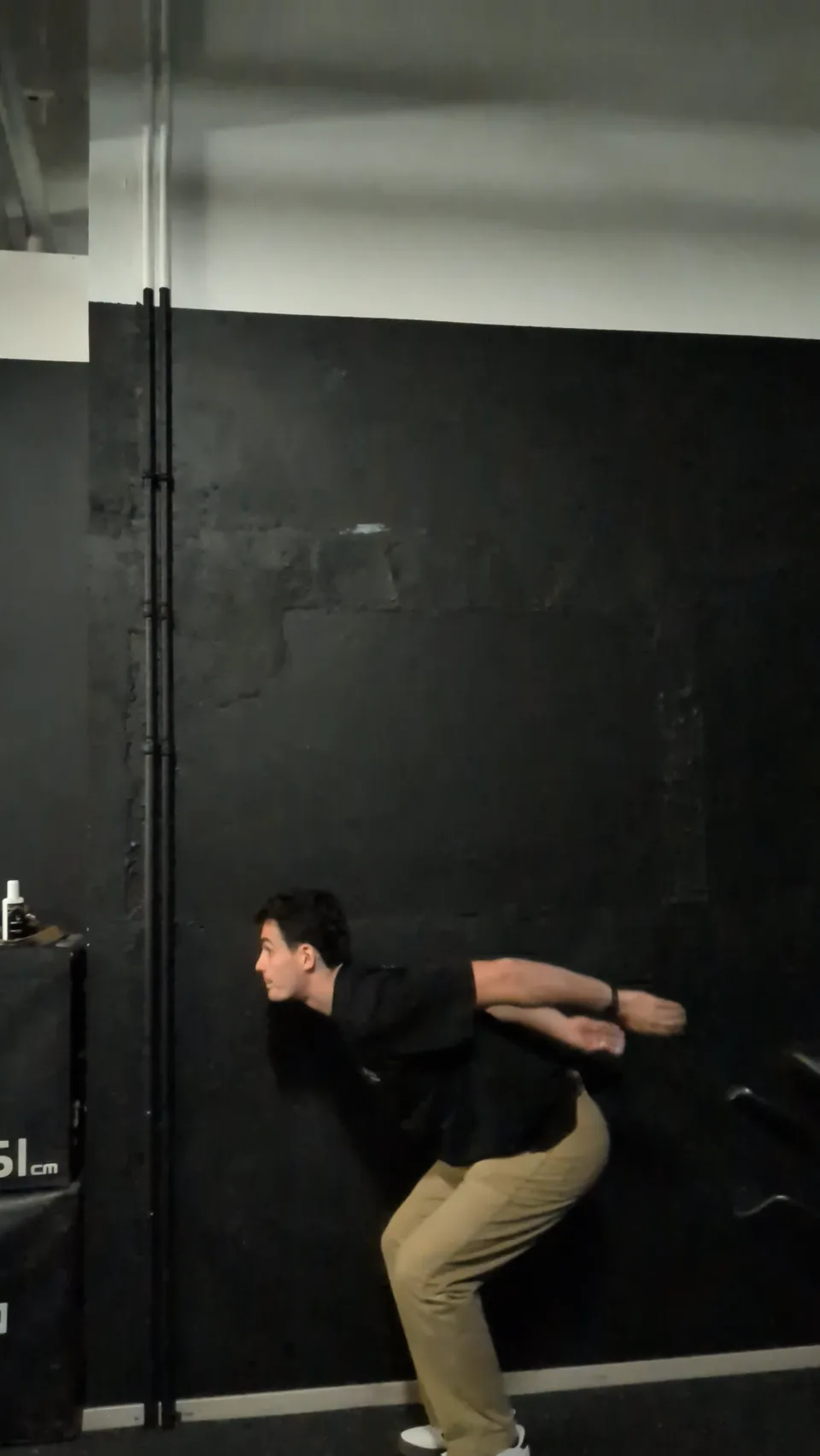
3Prepare to jumpBend your hips and knees and swing your arms behind you to prepare for the jump. 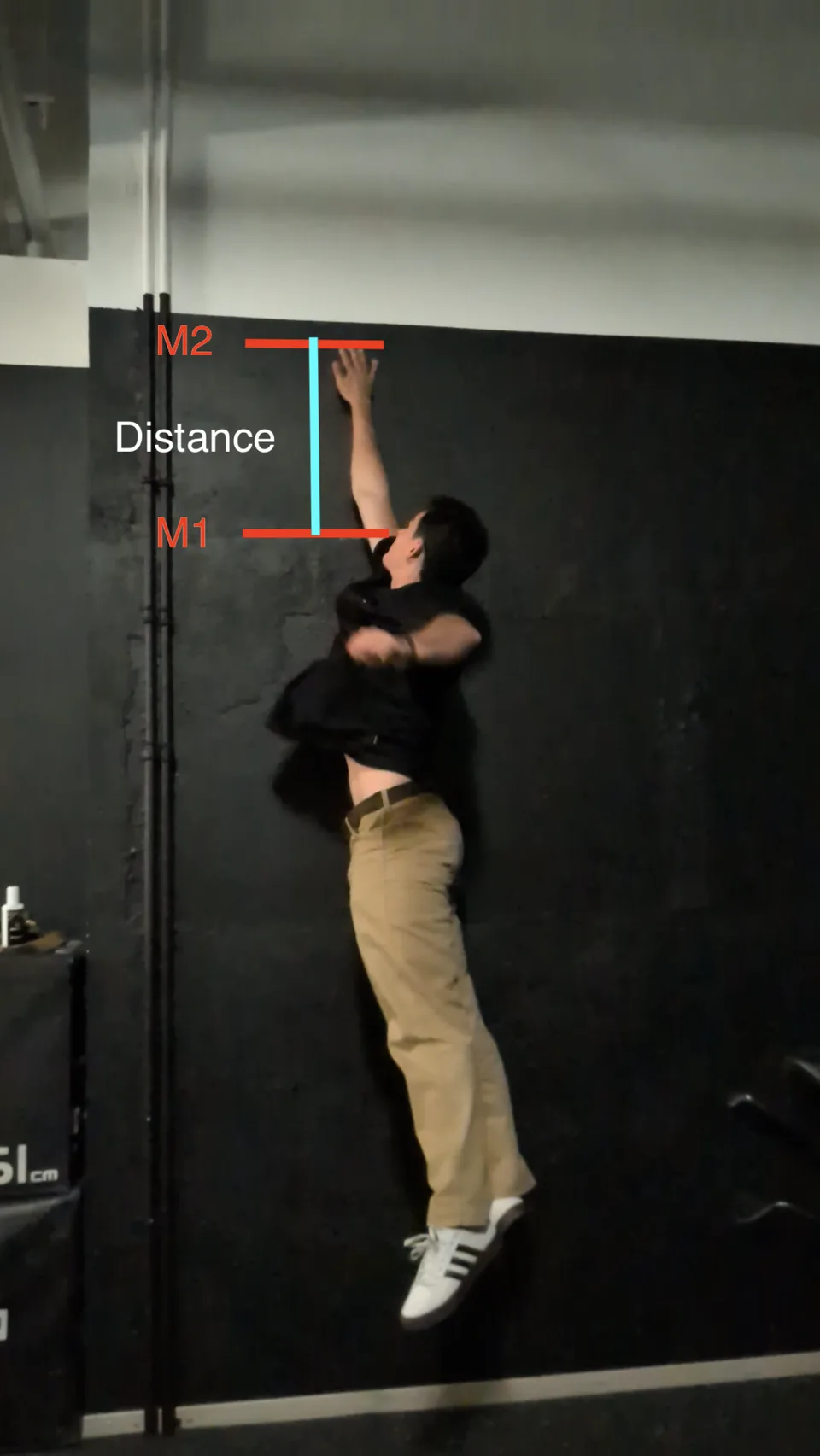
4Jump and markJump upward as high as possible. Touch the wall at your highest reach to leave the second mark, M2.
Scoring
Measure the vertical distance between M1 and M2, or enter both heights from the same floor reference. Complete three jumps using the same technique. Record each distance and calculate their mean.
Interpretation
Compare repeat measurements made with the same protocol. A height alone does not establish a universal fitness rating.
Sources
- BrianMac Sports Coach: Sargent Jump TestWall-touch procedure and mean-of-three scoring. The calculator also reports the best attempt.
- Sargent, D.A. (1921)Original description of the jump-and-reach test the protocol takes its name from.
- Usefulness of the jump-and-reach test (2010)Research in professional male volleyball players. Its findings do not provide general-population ratings.
Sources checked by SoloTrainer.net · 2026-09-22